
Pamela is the Head Gardener at the Botanic Gardens in Inverness. The Botanic Gardens have been in operation over 30 years and are run through Highlife Highland. They are situated within the walled garden of the old Bught House, where the Ice Rink is now.
The site began as the nursery for the council’s bedding plants. It has been expanded since and continues to improve as a visitor attraction for locals and tourists. Major upgrades and improvement works, including building the tropical and cactus houses were made possible through the award of external funding.
What were the reasons for you to want to start your site?
Although we have been composting garden waste for many years, there is also a desire to compost food waste from the Café as we recognise that we could make use of this resources to benefit the gardens as opposed to it having to be transported off site. Operationally we strive to be as environmentally conscious as possible.
As a large garden we have a lot of green waste to compost. Our busy Café also produces a lot of food waste, and we want to be able to compost as much of the food waste as we can.
Our Story
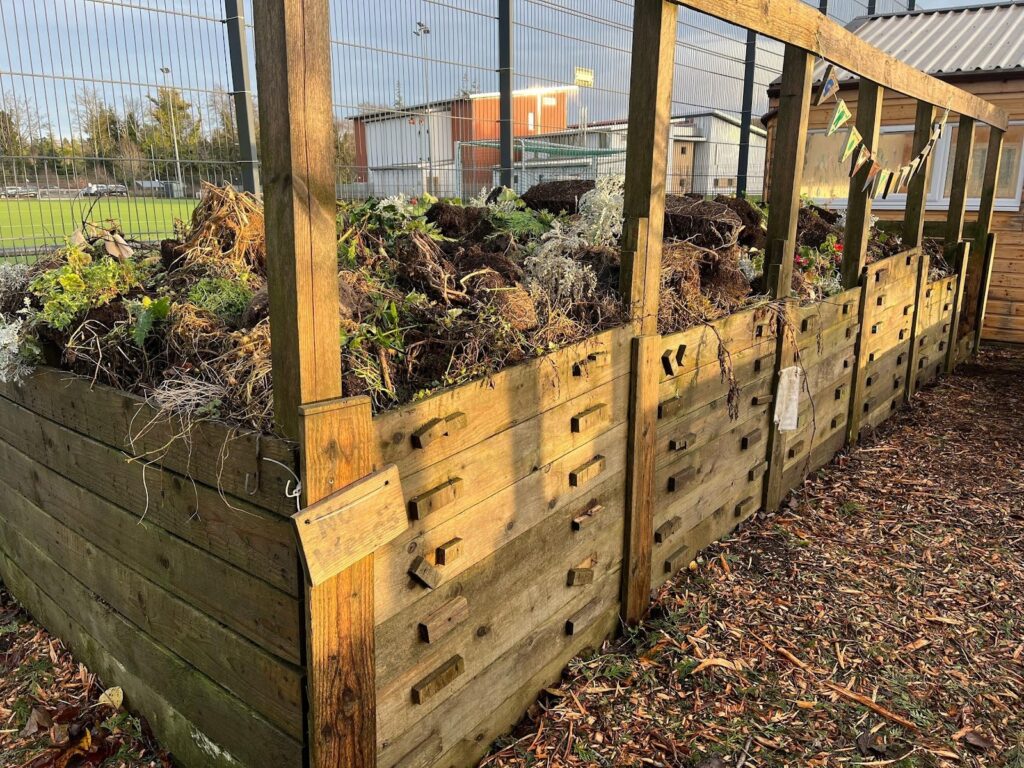
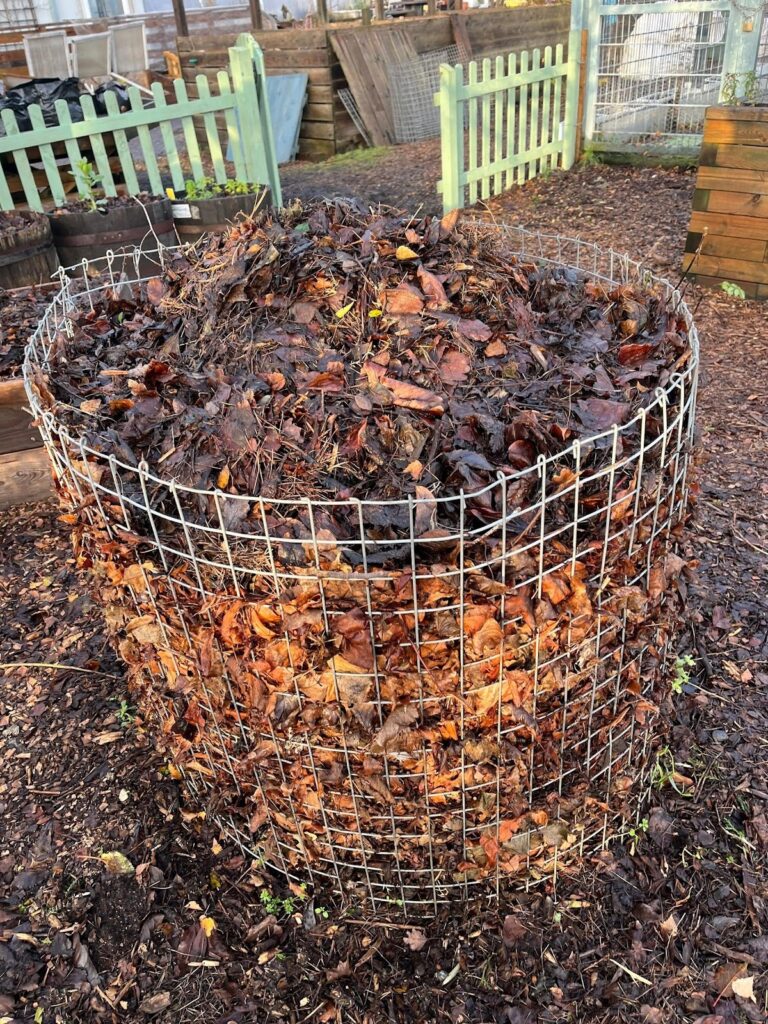
A garden composting area has been in operation for many years. The gardens compost all the garden waste, for use as mulch onto the gardens. The Grow Project does the same, and also composts the hanging basket plants after the summer displays. This area consists of many large wooden bays where the garden waste is put to start composting, with a mixture of greens and brown waste. This then gets turned regularly until our compost is ready.
The Grow Project is a vocational gardening project for those with additional needs. It has a beautiful, productive and wildlife-friendly garden open to the public assisted by a team of community volunteers. For more information about the Grow Project visit here or follow on Facebook.
We were first told of the opportunity of securing a second hand Big Hanna by Highland Good Food Partnership who put us in touch with Lesley Hawkins from Lochaber Environmental Group, which was part of the Highland Community Waste Partnership to assist in the application process. (The Highland Community Waste Partnership ran from April 2022 – March 2025). A learning exchange visit to Mull was arranged by Lesley in conjunction with Ewan Baxter of Mull and Iona Community Trust (MICT) and we were invited along in Sept 2024. During this visit we got to see various types of composting vessels in practice. This visit was invaluable and showed us the pros and cons of composting food waste through the use of a rocket composter, a Biolan composter, a Ridan composter, a hot bin composter and a Big Hanna.
Challenges, successes and Results
Challenges
Sourcing a large scale hot composter on a restricted budget is a problem. We were able to source a second hand Big Hanna Composter but unfortunately, as this had not been in operation for some time, the control circuit board had a failure which was too expensive for us to replace. This has still not been resolved, and is a cause of frustration for us.
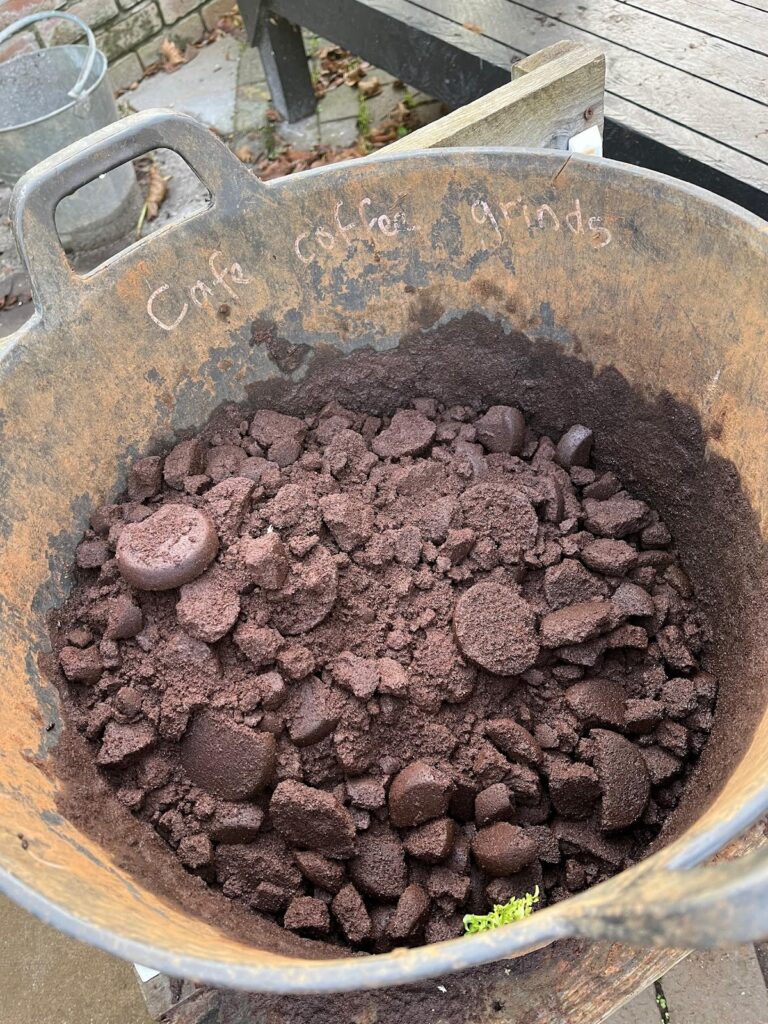
As an interim we have invested in a Jora JK125 composter which is allowing us to compost some of the Café waste, including their coffee grinds. However creating the correct mix for optimum composting of this food waste has been difficult. A lot of the Café waste is made up of bread, and this needs the addition of green waste to allow for composting.
We would very much like to be able to compost the Café’s take-away cups and containers, but without a specialist hot composter this is not possible.
Successes
Monitoring and turning the Jora composter is on our the gardeners’ daily duty list, to make sure that we regularly add additional input, and that the waste materials are getting turned regularly to aerate the mixture and maintain the composting process. We are finding that we are getting to a hot temperature very quickly. We use one compartment as the “live” feed, and the second continues to compost until the first one is full. This second compartment is then emptied and added to our cold composting bays to fully finish composting, and this then becomes the “live” compartment.
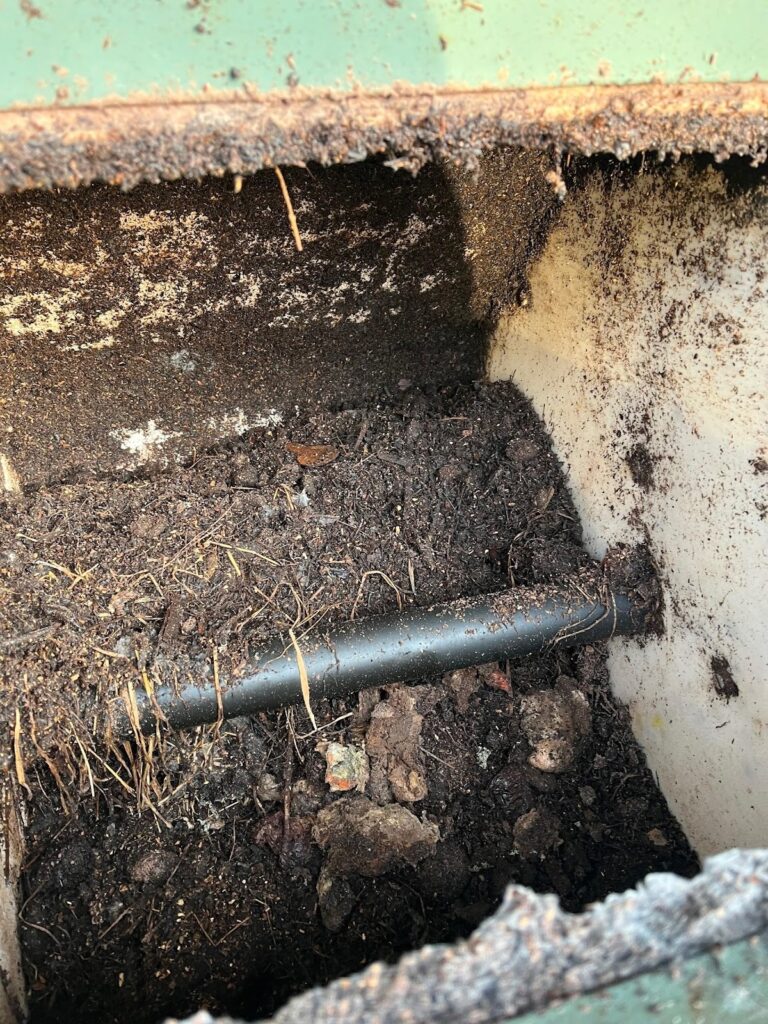
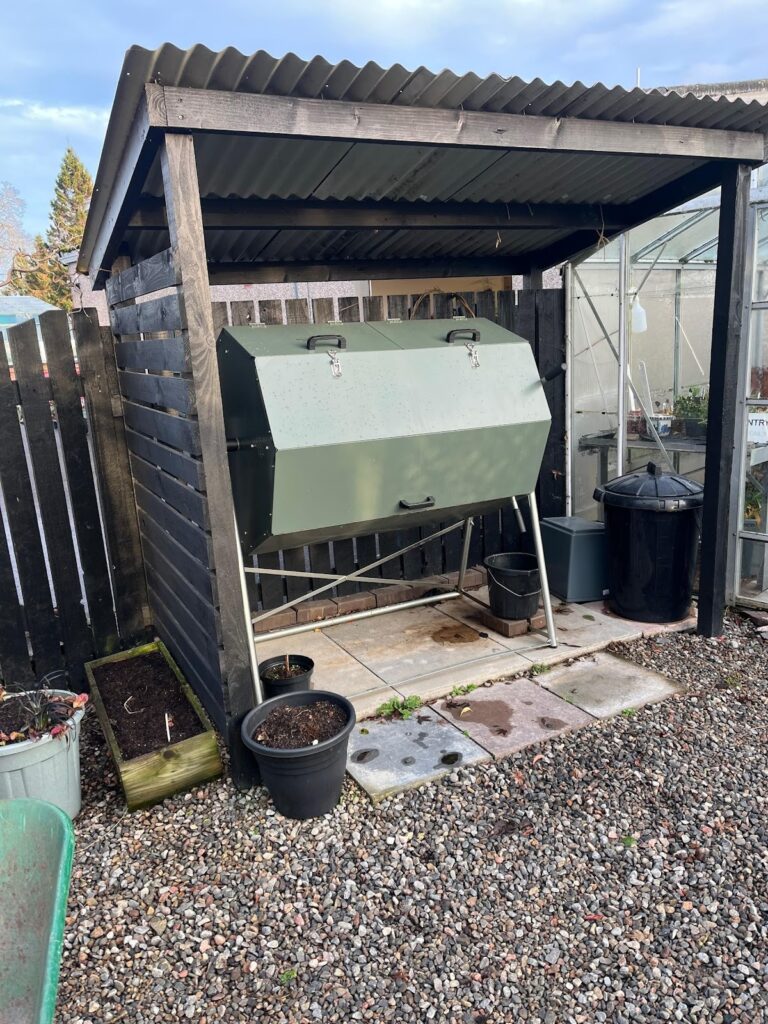
We produce a wonderful quality compost which we use to mulch the gardens. This is a true circular solution and helps us reduce the cost of purchased compost that we would need to keep the gardens in top condition, plus reducing energy involved in moving and processing this waste off site.
Results.
The addition of the Jora to our composting solution is allowing us to compost part of our Café waste, and reduce the amount of waste that needs transporting off site. We originally thought that the food waste would create a very wet medium and so planned to use wood pellets (which are a bi-produce from our biomass boiler), but in practice most of the waste is bread and we are having to add green waste to it.
It really makes us all smile when we empty the wonderful compost out of the Jora or the composting bays and are able to use it to feed our gardens.
To anyone thinking about composting, I’d definitely say “Just give it a go!” it’s really not as difficult as it first appears.